The Carter administration allowed the former shah into the United States for medical treatment. Iran demanded the shah’s return. On November 4, students seized the U.S. Embassy and 52 diplomats in Tehran. The hostage crisis dragged on for 444 days. On November 5, interim Prime Minister Bazargan resigned, along with his cabinet, to protest the embassy seizure. On November 12, Washington cut off oil imports from Iran. On November 14, President Carter issued Executive Order 12170 freezing an estimated $6 billion of Iranian assets and official bank deposits in the United States.
Ali Limonadi’s Chronicle of Iranian Resilience
Erfan Fard
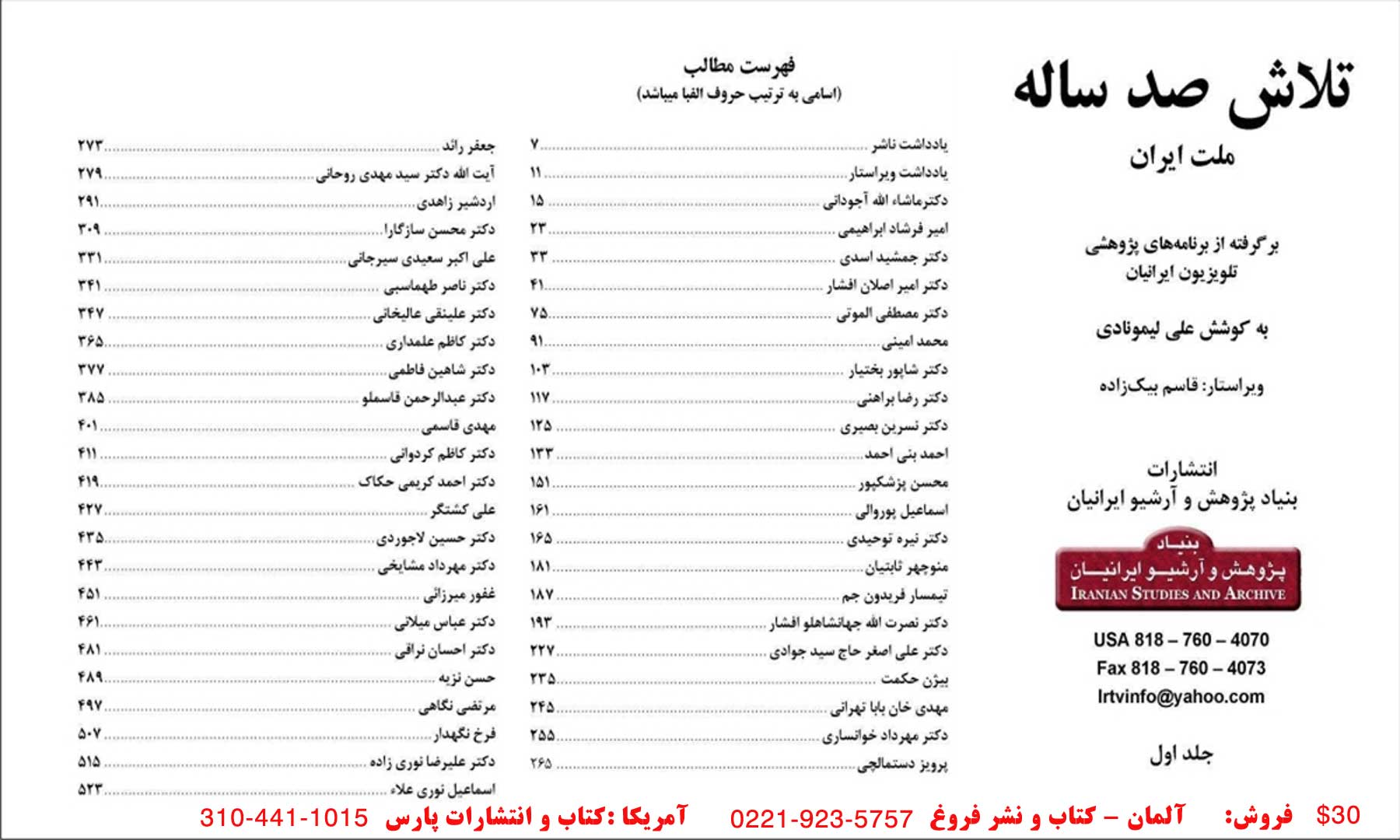
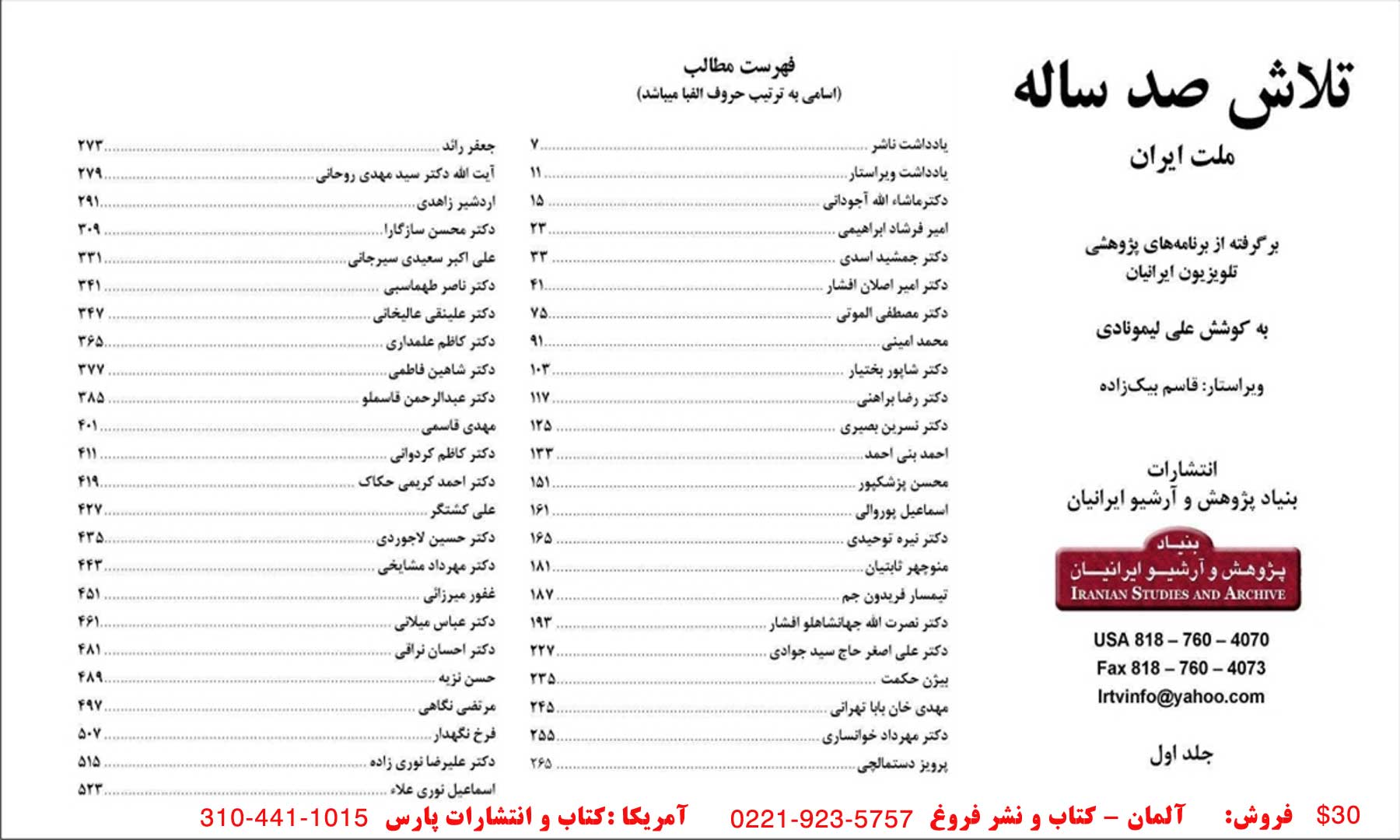
Ali Limonadi, not merely a filmmaker but a chronicler of the Iranian spirit, has embarked on a monumental journey through the tangled narrative of Iranian
democracy and human rights. His latest offering, “The Hundred-Year Effort” (100 Years of Struggle Towards Democracy in Iran), is more than a book—it
is an exquisitely crafted mosaic of resilience, chronicled through the lives of Iranians scattered across the globe.
For decades, the quest for democracy in Iran has been a Sisyphean task, marred by setbacks and reprisals from an authoritarian regime that brooks no
dissent. Yet, despite these challenges, the Iranian will for democratic governance has not waned; it has only morphed, finding new expressions and
sanctuaries outside its geographical confines. Limonadi, a pioneer in Iranian television abroad and the founder of the Iranian Research and Archive
Foundation in America, understands this narrative deeply. Educated in art and directing in Germany, his expertise and personal experiences imbue his work
with authenticity and passion.
In “The Hundred-Year Effort” (100 Years of Struggle Towards Democracy in Iran), Limonadi doesn’t just write about history; he engages directly with it. He
draws on interviews with over a hundred Iranian scholars, activists, and thinkers to stitch together a narrative that spans decades and continents. What emerges is a compelling account of a dispersed people’s relentless pursuit of liberty.
This book serves as a platform where voices, often stifled within Iran, find expression in the diaspora. Limonadi delves into discussions with renowned
political and social figures who represent a spectrum of political beliefs from the Iranian community abroad. These discussions aren’t merely academic—they are pulsating with the urgency and fervor of those who live in the shadow of potential reprisal yet speak out with unyielding courage.
Limonadi’s work reveals a complex picture of Iranian society, both at home and in exile. It highlights the ideological divides and the shared aspirations that
connect the Iranian diaspora worldwide. Through poignant narratives and incisive analysis, Limonadi paints a picture of a community that, despite geographical and political fragmentation, is united in its quest for democratic norms and human rights.
What makes “The Hundred-Year Effort” particularly captivating is its format. Part historical record, part documentary film, it transcends the traditional confines of a ‘book.’ Limonadi employs multimedia elements to enhance the storytelling, integrating video interviews that add a vivid layer of interaction between the reader and the subjects. These documentary snippets have resonated widely, finding a robust audience among Iranian social networks and political circles, where they have sparked discussions and debates about the future of democracy in Iran.
The book does not shy away from the harsh realities of activism. It portrays the perilous landscape of Iranian politics, where activists navigate threats to their freedom and even their lives. Yet, it also captures the indomitable spirit of those who resist, those who persistently advocate for change despite the risks. This juxtaposition of danger and determination forms the heart of Limonadi’s narrative.
Moreover, Limonadi’s approach to research and storytelling is refreshingly innovative. Eschewing the solitude of library archives, he opts instead for a
dynamic exploration of ideas and experiences in the real world. He weaves his findings into a broader socio-political context, offering readers not just a series of events, but a profound understanding of the ongoing struggle for democratic reform in Iran.
“The Hundred-Year Effort” is a testament to the power of collective memory and the unyielding pursuit of justice. It challenges readers to reflect on the
nature of political activism and the complexities of advocating for democracy in a repressive environment. The book serves as a reminder that the fight for
democracy is never solely a local affair; it is a global endeavor that requires solidarity, understanding, and support from a community that transcends
national boundaries.
In essence, Limonadi’s book is not just an academic treatise on Iranian politics—it is a clarion call to the world to recognize and support the aspirations of the Iranian people for democracy and human rights. It’s an invitation to witness the resilience of a people who, despite the odds, continue to hope, to fight, and to believe in the promise of a better future.
Through “The Hundred-Year Effort”, Ali Limonadi has not only documented a century of challenges; he has immortalized the spirit of a nation’s indomitable
quest for freedom.